




-
admin
- October 31, 2025
Breast & Cervical Cancer Myths Kolkata | Facts Every Woman Should Know
Cancer awareness has grown over the years, but myths and misinformation still cloud the truth—especially when it comes to breast and cervical cancer. In India, thousands of women delay diagnosis or avoid screening due to fear, stigma, and incorrect beliefs. The result? Cancers that could have been treated early often reach advanced stages.
As one of Kolkata’s leading surgical oncologists, Dr. Pallabika Mandal (M.Ch, AIIMS New Delhi) believes that awareness and education are the strongest tools against cancer. By understanding the facts and letting go of long-standing myths, women can take control of their health and improve survival outcomes.
Let’s clear up some of the most common myths about breast and cervical cancer that every woman should stop believing.
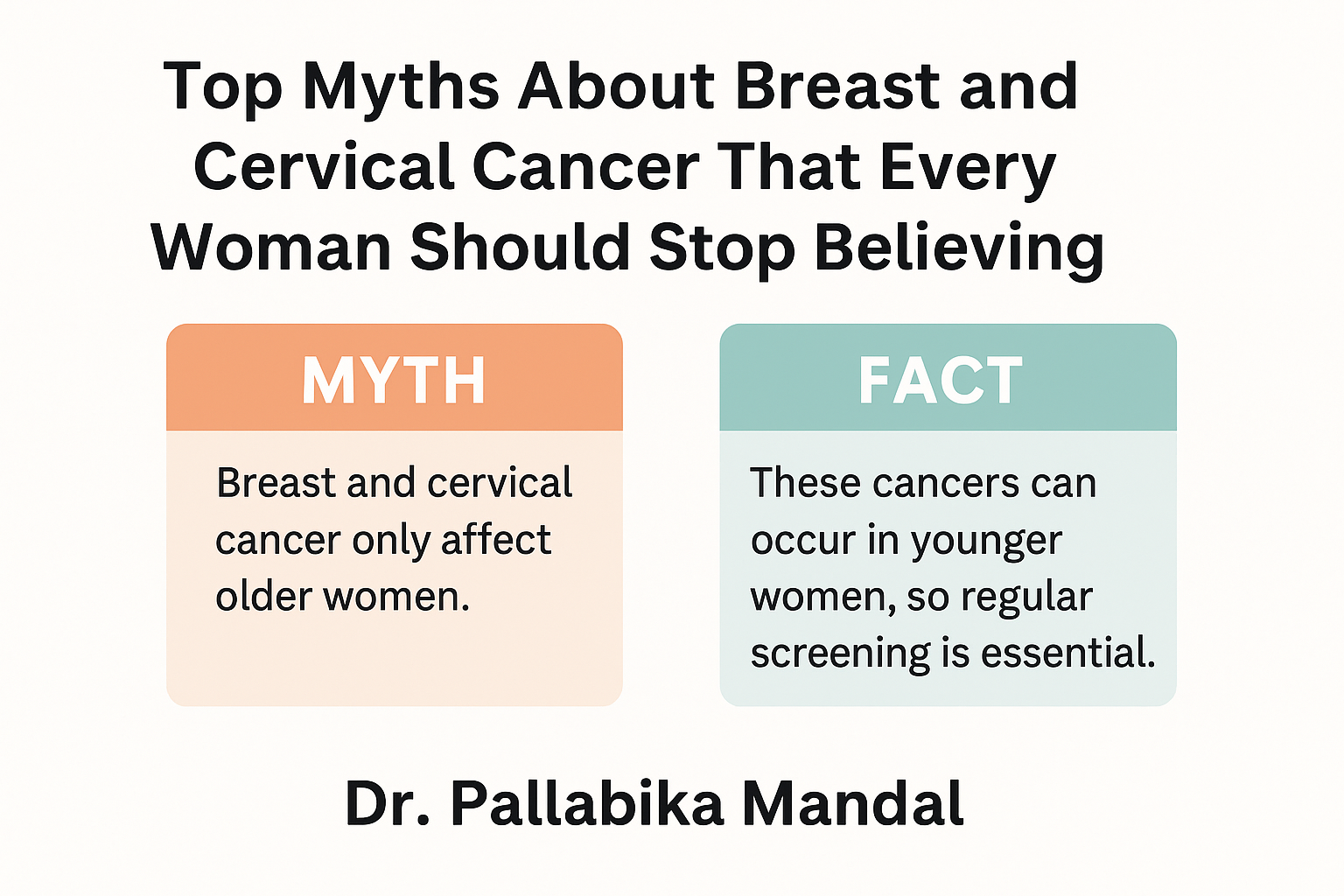
Myth 1: Only Older Women Get Breast or Cervical Cancer
Fact:
While the risk increases with age, younger women are not immune. In fact, doctors are seeing a rising number of cases among women in their 20s, 30s, and 40s—especially in urban areas like Kolkata.
Lifestyle changes, hormonal imbalances, obesity, and delayed childbirth are increasing cancer risk among younger women. Cervical cancer, in particular, can occur as early as the reproductive years if the HPV virus remains undetected.
👉 Takeaway:
Women above 21 should begin Pap smear screening for cervical cancer, and those over 40 should get regular breast check-ups or mammograms.
Myth 2: Breast Cancer Is Always Painful
Fact:
Most breast cancers are painless in the early stages. Waiting for pain before seeing a doctor can be dangerous. A painless lump, nipple discharge, or slight change in breast skin may indicate cancer even without discomfort.
By the time pain develops, the disease might have progressed. That’s why self-examination and early medical evaluation are vital.
👉 Learn more about early diagnosis and treatment options from the
Best Breast Cancer Doctor in South Kolkata | Peerless Hospital.
Myth 3: Cervical Cancer Happens Only to Women With Multiple Partners
Fact:
This is one of the most harmful misconceptions. Cervical cancer is caused by Human Papillomavirus (HPV), which can affect any woman who has been sexually active—even with one partner.
HPV is extremely common and often goes unnoticed for years. The good news? It’s preventable through HPV vaccination and regular Pap or HPV testing.
👉 Tip: Get vaccinated early (between ages 9–26) and continue routine screening.
Myth 4: A Family History Means You Will Definitely Get Cancer
Fact:
Having a family history does not guarantee that you’ll develop cancer—it only increases your risk slightly. Most breast and cervical cancers are sporadic, meaning they occur due to genetic mutations, hormonal changes, or environmental factors rather than inheritance.
However, women with a family history of breast, ovarian, or uterine cancer should discuss genetic testing (like BRCA1/BRCA2) with a specialist.
👉 For expert evaluation and prevention planning, consult the
Best Uterine Cancer Specialist in South Kolkata.
Myth 5: Wearing Tight Bras or Deodorants Causes Breast Cancer
Fact:
This is a widely circulated myth on social media but has no scientific evidence. Neither tight bras nor underarm deodorants cause breast cancer.
The actual causes include hormonal factors, obesity, alcohol use, lack of breastfeeding, and radiation exposure. Regular exercise, balanced diet, and early screening remain the real preventive measures.
Myth 6: Cervical Cancer Can’t Be Prevented
Fact:
Cervical cancer is one of the few cancers that can actually be prevented. Regular Pap smear tests can detect pre-cancerous changes in the cervix long before cancer develops.
In addition, HPV vaccination drastically reduces the risk of cervical cancer. Yet, many women in Kolkata still skip these preventive steps due to lack of awareness.
Dr. Pallabika Mandal stresses the importance of early intervention—prevention is always better than cure.
Myth 7: Only Women With Symptoms Need Cancer Screening
Fact:
Cancer screening is for asymptomatic women. By the time symptoms appear, cancer may already be advanced.
- Pap Smear & HPV Test: Every 3 years (for women aged 21–65)
- Mammogram: Every 1–2 years (for women aged 40+)
- Breast Self-Exam: Monthly at home
These tests save thousands of lives by catching cancer in its earliest, most treatable stage.
Myth 8: A Breast Lump Always Means Cancer
Fact:
Not all breast lumps are cancerous. Many are benign conditions like cysts, fibroadenomas, or infections. However, the only way to be sure is through a clinical examination and imaging (ultrasound/mammogram).
Ignoring a lump out of fear can cause unnecessary delay. Early evaluation is always the safest choice.
Myth 9: Breastfeeding Increases the Risk of Cancer
Fact:
Quite the opposite—breastfeeding actually reduces the risk of breast and ovarian cancers. It helps regulate hormones and promotes healthy cell turnover in the breast.
Women who breastfeed for longer durations often have lower rates of hormonal cancers.
Myth 10: Cancer Treatment Is Always Painful and Ineffective
Fact:
Modern cancer treatments have evolved significantly. With minimally invasive surgery, targeted therapy, and immunotherapy, recovery and success rates are higher than ever.
At Peerless Hospital, Dr. Pallabika Mandal and her team use advanced surgical techniques that minimize pain, reduce hospital stays, and improve outcomes. Many patients return to normal life after successful treatment.
👉 Learn about advanced and compassionate care from the
Best Breast Cancer Doctor in South Kolkata | Peerless Hospital.
Myth 11: Cervical Cancer Screening Is Painful
Fact:
A Pap smear is a simple, quick, and nearly painless procedure. It might cause slight discomfort but takes less than 10 minutes. The benefits far outweigh the temporary unease.
Regular Pap tests have drastically reduced cervical cancer rates worldwide. Skipping this test puts women at unnecessary risk.
Myth 12: Once You’re Cancer-Free, There’s No Need for Follow-Up
Fact:
Follow-up is essential. Even after successful treatment, regular monitoring helps detect recurrence early and ensures overall well-being.
Post-treatment visits usually include physical exams, imaging, and sometimes tumor marker tests. Dr. Mandal encourages her patients to stay proactive about their health and continue periodic evaluations.
Empowering Women Through Truth and Awareness
Cervical and breast cancer are among the most common cancers affecting women—but they are also among the most preventable and treatable, especially when diagnosed early. Dispelling myths and spreading facts empower women to act with confidence rather than fear.
Dr. Pallabika Mandal’s mission goes beyond surgery—it’s about educating women, breaking taboos, and making cancer awareness part of everyday conversation.
When to Consult a Cancer Specialist
You should seek expert advice if you experience:
- Persistent breast or pelvic pain
- Unexplained discharge or bleeding
- Lumps in the breast or underarm
- Changes in nipple or vaginal discharge
- Abnormal test results
📍 Consult Locations:
Peerless Hospital, Panchasayar, Kolkata