




-
admin
- December 9, 2025
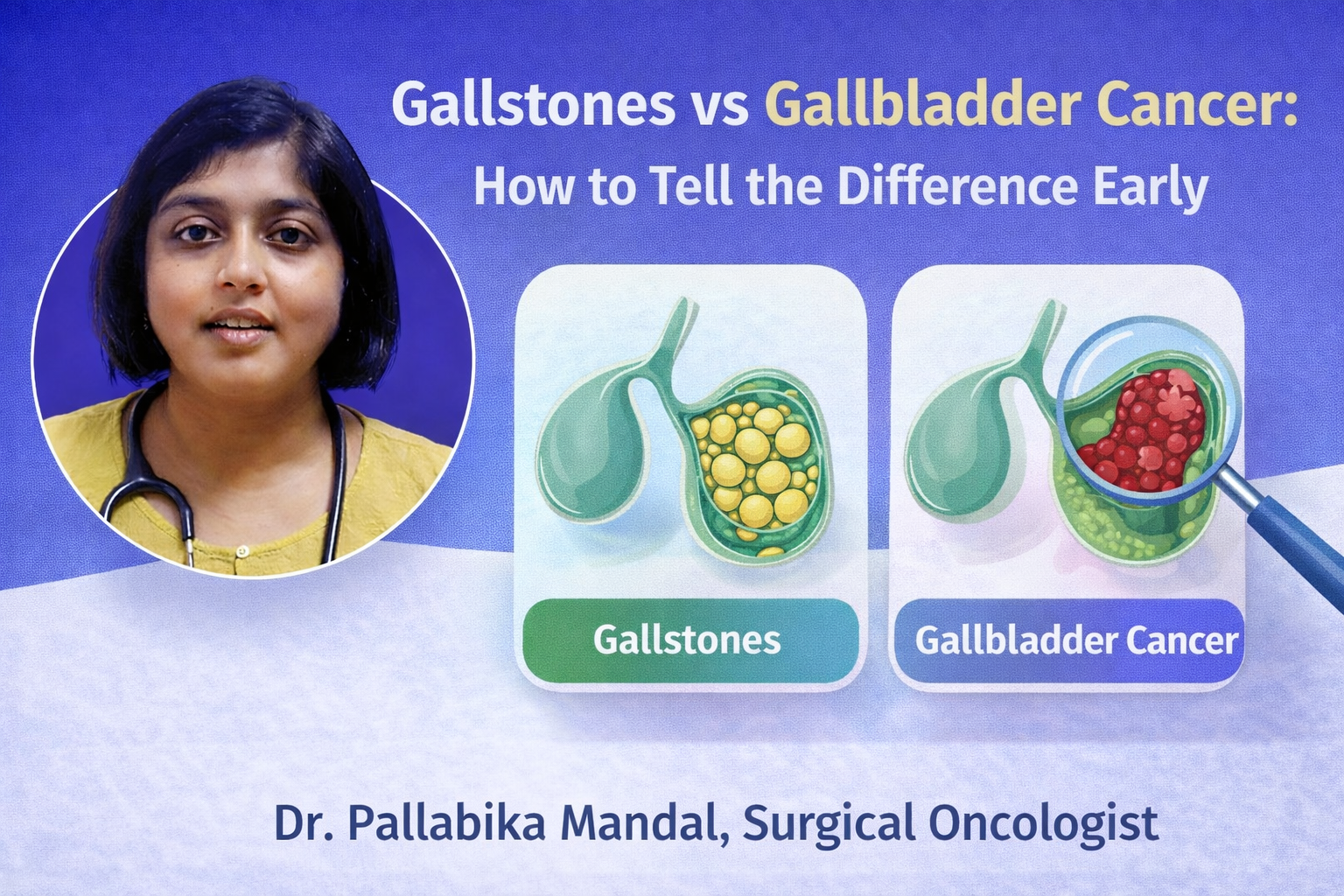
Gallstones vs Gallbladder Cancer: How to Tell the Difference Early
Gallbladder pain is one of the most common reasons patients visit a surgeon in Kolkata. In most cases, the cause is gallstones, a condition many people live with for years. However, a small percentage of patients—especially in Eastern India—develop gallbladder cancer, a disease that often mimics gallstone symptoms in its early stages.
This similarity leads to dangerous delays in diagnosis.
As a Surgical Oncologist trained at AIIMS, New Delhi, Dr. Pallabika Mandal frequently sees patients who were treated for gallstones for months or years, only to later discover an underlying gallbladder cancer. The key difference lies in early recognition, timely imaging, and specialist evaluation.
This guide explains how gallstones and gallbladder cancer differ, what warning signs should never be ignored, and when you should consult a gallbladder cancer specialist in Kolkata.
For a complete overview of gallbladder cancer diagnosis and treatment, patients can also refer to
👉 Gallbladder Cancer Treatment in Kolkata.
Understanding Gallstones
Gallstones are hardened deposits of bile that form inside the gallbladder. They are extremely common, especially among:
- Women
- People over 40
- Patients with obesity
- Individuals with sedentary lifestyles
- Those with a family history of gallstones
Common Symptoms of Gallstones
- Pain in the upper right abdomen (especially after fatty meals)
- Nausea or vomiting
- Bloating or indigestion
- Pain that comes and goes
Many people have gallstones without symptoms, and not all gallstones require surgery.
Understanding Gallbladder Cancer
Gallbladder cancer develops when abnormal cells grow uncontrollably in the gallbladder lining. Unlike gallstones, cancer often progresses silently and spreads early to nearby organs such as the liver.
In India—and particularly in West Bengal—gallbladder cancer is more common than in many other regions of the world.
Why Gallbladder Cancer Is Often Missed
- Symptoms overlap with gallstones
- Early signs are vague
- Pain may be mild or intermittent
- Many patients already have gallstones
This overlap makes specialist evaluation essential.
Gallstones vs Gallbladder Cancer: Key Differences
1. Nature of Pain
Gallstones
- Sudden pain after meals
- Pain episodes come and go
- Often relieved with medication
Gallbladder Cancer
- Persistent, dull pain
- Pain gradually worsens
- Pain may not respond to usual treatment
➡️ Persistent pain despite treatment is a red flag.
2. Weight Loss & Appetite
Gallstones
- Appetite usually normal
- No significant weight loss
Gallbladder Cancer
- Unexplained weight loss
- Reduced appetite
- Early fatigue
➡️ Weight loss with gallbladder pain needs urgent evaluation.
3. Jaundice (Yellowing of Eyes or Skin)
Gallstones
- Occurs occasionally due to temporary blockage
Gallbladder Cancer
- Progressive jaundice
- Dark urine, pale stools
- Severe itching
➡️ Persistent jaundice strongly suggests malignancy.
4. Palpable Lump or Abdominal Swelling
Gallstones
- Rare
Gallbladder Cancer
- May appear in advanced stages
- Indicates liver or local spread
5. Duration of Symptoms
Gallstones
- Symptoms may remain stable for years
Gallbladder Cancer
- Symptoms worsen over weeks or months
➡️ Worsening symptoms always require re-evaluation.
Can Gallstones Turn Into Gallbladder Cancer?
This is one of the most common patient questions.
✔ Yes, long-standing gallstones increase cancer risk
✔ Chronic inflammation damages gallbladder lining
✔ Large stones (>3 cm) are especially risky
However, not everyone with gallstones develops cancer.
Dr. Pallabika Mandal evaluates gallstone patients carefully to determine:
- Duration of gallstones
- Gallbladder wall thickness
- Presence of suspicious imaging findings
When Gallstones Should Raise Suspicion of Cancer
Gallstones should never be ignored if accompanied by:
- Persistent pain lasting months
- Weight loss
- Loss of appetite
- Jaundice
- Gallbladder wall thickening on ultrasound
- Mass seen on imaging
In such cases, early referral to a gallbladder cancer specialist in Kolkata is critical.
Diagnostic Tests That Help Differentiate the Two
1. Ultrasound
- First-line test
- May show stones, wall thickening, or mass
2. Contrast CT Scan
- Detects tumor size
- Checks liver and lymph node involvement
3. MRI / MRCP
- Evaluates bile duct involvement
4. Tumor Markers
- Supportive, not definitive
5. Diagnostic Laparoscopy
- Used in selected cases to confirm operability
Proper staging avoids unnecessary or incomplete surgery.
Why Early Specialist Evaluation Matters
Many patients undergo gallbladder removal for stones, only to discover cancer on biopsy. While this is sometimes unavoidable, expert evaluation beforehand reduces missed diagnoses.
Dr. Pallabika Mandal emphasizes:
- Detailed imaging review
- Oncologic decision-making
- Avoiding incomplete surgeries
For patients already diagnosed, understanding when surgery is beneficial is discussed in detail here:
👉 When Is Surgery Necessary for Gallbladder Cancer?
What If Cancer Is Found After Gallstone Surgery?
This situation—called incidental gallbladder cancer—requires urgent reassessment.
Next steps may include:
- Repeat imaging
- Staging work-up
- Possible re-surgery (radical cholecystectomy)
Early referral significantly improves outcomes.
When Should You See a Gallbladder Cancer Specialist in Kolkata?
You should seek specialist care if:
- Gallstone symptoms persist or worsen
- Imaging shows gallbladder wall thickening
- Weight loss accompanies abdominal pain
- Jaundice develops
- Cancer is suspected or confirmed
Early evaluation often determines whether surgery can be curative.
Expert Care with Dr. Pallabika Mandal
Dr. Pallabika Mandal
M.Ch (Surgical Oncology), AIIMS New Delhi
Specialist in Gallbladder & GI Cancers – Kolkata
She provides structured evaluation, accurate staging, and evidence-based treatment planning for gallbladder conditions ranging from benign disease to cancer.
Frequently Asked Questions (FAQs)
1. Can gallstones always be safely ignored?
No. Long-standing or symptomatic gallstones need evaluation.
2. Do all gallbladder cancers cause pain?
No. Some remain silent until advanced stages.
3. Is ultrasound enough to rule out cancer?
Not always. CT or MRI may be required.
4. Can gallbladder cancer be detected early?
Yes, if warning signs are identified early.
5. Should I remove gallstones to prevent cancer?
Not always. Surgery decisions depend on risk factors and findings.