




-
admin
- January 8, 2026
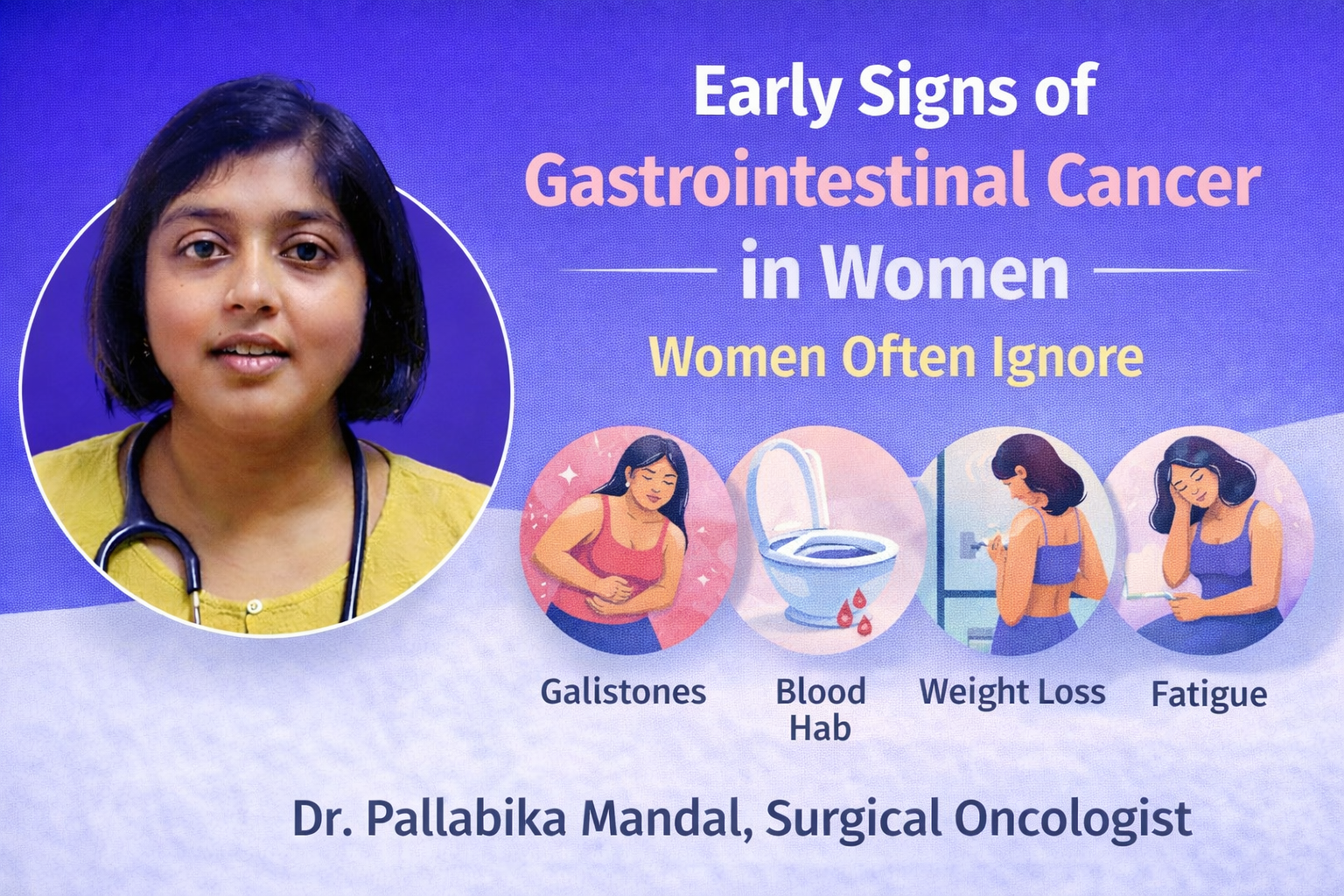
Early Signs of Gastrointestinal Cancer in Women | Expert Oncologist Advice
Gastrointestinal (GI) cancers—including cancers of the stomach, colon, rectum, gallbladder, pancreas, and esophagus—are often thought of as diseases that affect men more than women. In reality, women frequently present later, not because symptoms are absent, but because early signs are subtle, easily dismissed, or mistaken for routine digestive or hormonal issues.
As a female Surgical Oncologist trained at AIIMS, New Delhi, Dr. Pallabika Mandal regularly treats women who seek help only after symptoms have progressed. Many of these cases could have been diagnosed earlier with timely evaluation.
This article highlights the early warning signs of GI cancers that women often ignore, explains why delays happen, and outlines when to consult a specialist in Kolkata.
For readers seeking a broader overview of GI cancer care, diagnosis, and treatment pathways, you may also explore the relevant treatment guides available on this site.
Why GI Cancer Symptoms in Women Are Often Missed
Several factors contribute to delayed diagnosis in women:
- Symptoms overlap with common conditions (gastritis, IBS, acidity)
- Hormonal changes affect digestion
- Women often prioritise family health over their own
- Pain tolerance and symptom normalisation
- Fear or embarrassment around bowel-related symptoms
Unfortunately, GI cancers are most treatable when detected early. Recognising subtle changes is critical.
1. Persistent Indigestion or Acidity That Doesn’t Respond to Treatment
Occasional indigestion is common. But persistent acidity, bloating, or upper abdominal discomfort that lasts weeks or months—despite medication—should not be ignored.
Possible underlying cancers:
- Stomach (gastric) cancer
- Esophageal cancer
- Gallbladder cancer
Red flags include:
- Symptoms worsening over time
- Discomfort unrelated to meals
- Night-time pain
- Unexplained nausea
If indigestion becomes a daily problem, further evaluation is necessary.
2. Subtle Changes in Bowel Habits
Women often experience bowel changes due to diet, stress, or hormonal cycles. However, persistent changes deserve attention.
Warning signs:
- New-onset constipation or diarrhoea
- Alternating bowel habits
- Narrow or ribbon-like stools
- Feeling of incomplete bowel evacuation
Possible cancers:
- Colon cancer
- Rectal cancer
These changes are especially concerning if they persist beyond 3–4 weeks.
3. Fatigue and Unexplained Weakness
Chronic tiredness is frequently attributed to lifestyle, anaemia, or stress. But persistent fatigue without a clear cause can be an early sign of GI cancers—especially those causing slow blood loss.
Often associated with:
- Colon cancer
- Gastric cancer
If fatigue is accompanied by:
- Breathlessness
- Dizziness
- Pale skin
a medical evaluation is essential.
4. Unexplained Weight Loss
Weight loss without dietary changes or increased activity is never normal.
Concerning features:
- Loss of appetite
- Early fullness after eating
- Clothes becoming loose
Possible causes:
- Stomach cancer
- Pancreatic cancer
- Advanced gallbladder cancer
Even modest but steady weight loss should be investigated.
5. Abdominal Pain Women Learn to “Live With”
Women often tolerate abdominal discomfort, especially when pain is intermittent or mild.
Concerning pain patterns:
- Pain that becomes progressively frequent
- Pain localised to one side
- Pain associated with nausea or vomiting
Possible cancers:
- Gallbladder cancer (right upper abdomen)
- Pancreatic cancer (upper abdomen/back)
- Colon cancer
Pain that changes in character or intensity should not be ignored.
6. Blood in Stool or Rectal Bleeding
This is one of the most commonly ignored warning signs.
Many women assume bleeding is due to:
- Piles
- Constipation
- Anal fissures
However, any rectal bleeding—especially after age 40—must be evaluated.
Possible cancers:
- Colon cancer
- Rectal cancer
Early detection here can be life-saving.
7. Persistent Bloating or Abdominal Distension
Occasional bloating is common, but daily or progressive bloating is not.
When to worry:
- Bloating not relieved by passing gas
- Abdominal tightness
- Visible swelling
This can be associated with:
- Advanced GI cancers
- Gallbladder or liver involvement
8. Jaundice or Itching Without Skin Rash
Yellowing of eyes or skin, dark urine, or persistent itching—without rash—often signals bile duct obstruction.
Possible causes:
- Gallbladder cancer
- Pancreatic cancer
- Bile duct cancer
These symptoms require urgent evaluation.
Why Women Delay Medical Consultation
From clinical experience, common reasons include:
- Assuming symptoms are “normal”
- Fear of invasive tests
- Lack of time
- Social hesitation discussing bowel symptoms
Dr. Pallabika Mandal emphasises that early consultation does not always mean surgery—but delayed consultation often limits treatment options.
When Should Women Consult a GI Cancer Specialist?
You should seek expert evaluation if you experience:
- Symptoms lasting more than 3–4 weeks
- Progressive or worsening discomfort
- Weight loss or appetite loss
- Blood in stool
- Persistent fatigue
- Jaundice
Early assessment can rule out serious disease—or detect it when it is still treatable.
How Early Detection Changes Outcomes
Early-stage GI cancers often allow:
- Curative surgery
- Limited treatment
- Better quality of life
- Higher survival rates
Late-stage detection usually requires:
- More complex treatment
- Chemotherapy or palliative care
- Greater physical and emotional burden
Role of a Female Surgical Oncologist
Many women feel more comfortable discussing symptoms with a female specialist—especially sensitive GI or bowel issues.
As a female Surgical Oncologist, Dr. Pallabika Mandal provides:
- Compassionate consultation
- Clear explanations
- Evidence-based treatment planning
- Long-term follow-up care
Her focus is not only treatment—but early diagnosis and patient confidence.
Common Myths That Delay Diagnosis
“I’m too young for cancer.”
→ GI cancers are increasingly seen in younger women.
“It’s just acidity.”
→ Persistent symptoms deserve investigation.
“I’ll wait and see.”
→ Delay reduces options.
Listening to Your Body Matters
Your body often gives early signals. Recognising and acting on them is not overreacting—it is responsible healthcare.
If something feels different or persistent, trust your instincts and seek evaluation.
Consult Dr. Pallabika Mandal
Dr. Pallabika Mandal
M.Ch (Surgical Oncology), AIIMS New Delhi
Specialist in Gastrointestinal & Hepatobiliary Cancers – Kolkata
She offers expert evaluation, personalised treatment planning, and long-term care for GI cancers.
Frequently Asked Questions (FAQs)
1. Are GI cancers common in women?
Yes. Many GI cancers affect women and are often diagnosed late due to subtle symptoms.
2. Do all GI cancer symptoms involve pain?
No. Many early cancers are painless.
3. Should young women be concerned?
Yes. Age is not a guarantee against cancer.
4. Is screening always required?
Screening is advised based on age, symptoms, and risk factors.
5. Can early symptoms be treated without surgery?
Often yes—early detection expands treatment choices.