




-
admin
- May 22, 2026
Family History of Cancer: Are You at Higher Risk? Complete Guide for Kolkata Families (2026)
Family History of Cancer: Are You at Higher Risk? A Complete Guide for Patients and Families
One of the most common questions cancer specialists hear is:
“My father had cancer. Does that mean I will get cancer too?”
Or:
“Several people in my family have had cancer. Should I be worried?”
The answer is not always simple.
Having a family history of cancer does not automatically mean you will develop cancer. However, it can increase your risk and may require earlier screening, lifestyle changes, and closer medical monitoring.
For families across South Kolkata, including EM Bypass, Mukundapur, Garia, Jadavpur, Behala, Santoshpur, Ruby Hospital area, and nearby locations, understanding inherited cancer risk can help detect disease earlier and improve outcomes.
What Does Family History of Cancer Mean?
Family history refers to cancers diagnosed in:
- Parents
- Siblings
- Children
- Grandparents
- Aunts and uncles
When multiple close relatives develop cancer, doctors may consider hereditary risk factors.
Not every cancer is inherited.
In fact, most cancers occur due to a combination of:
- Age
- Lifestyle
- Environmental factors
- Random genetic changes
However, some cancers have a stronger genetic component than others.
How Much Does Family History Increase Cancer Risk?
Risk depends on:
- Type of cancer
- Number of affected relatives
- Age at diagnosis
- Relationship to affected family members
Generally, risk increases when:
- Multiple family members have the same cancer
- Cancer develops at a younger age
- Several generations are affected
Cancers Commonly Linked to Family History
Breast Cancer
Family history may increase risk significantly.
Risk is higher if:
- Mother had breast cancer
- Sister had breast cancer
- Multiple relatives were affected
Ovarian Cancer
Certain inherited mutations increase ovarian cancer risk.
Women with a strong family history should discuss screening options with a specialist.
Colon Cancer
Hereditary colorectal cancer syndromes can significantly increase risk.
Family members may need earlier colonoscopy screening.
Uterine Cancer
Some inherited conditions increase uterine cancer risk.
Prostate Cancer
Men with affected fathers or brothers may face higher risk.
Pancreatic Cancer
Although less common, inherited pancreatic cancer syndromes exist.
Does Family History Mean Cancer Is Guaranteed?
No.
This is one of the biggest misconceptions.
A family history increases risk but does not guarantee cancer development.
Many individuals with strong family histories never develop cancer.
Likewise, many people diagnosed with cancer have no family history at all.
Warning Signs You Should Never Ignore
Individuals with family history should pay close attention to:
- Unexplained weight loss
- Persistent fatigue
- Changes in bowel habits
- Abnormal bleeding
- Chronic pain
- Persistent bloating
- New lumps or swelling
Any persistent symptom deserves medical evaluation.
Why Early Screening Becomes More Important
People with inherited risk often benefit from earlier screening.
Screening may help identify:
- Precancerous changes
- Early-stage cancer
- Hidden abnormalities
Early detection frequently leads to simpler treatment and better outcomes.
Which Family Members Matter Most?
Doctors pay particular attention to:
First-Degree Relatives
These include:
- Mother
- Father
- Brother
- Sister
- Child
Cancer in first-degree relatives generally carries the greatest significance.
Second-Degree Relatives
These include:
- Grandparents
- Aunts
- Uncles
Patterns among second-degree relatives may also be important.
Lifestyle Still Matters
Even if cancer runs in the family, lifestyle choices remain important.
Healthy habits include:
- Avoiding tobacco
- Limiting alcohol
- Maintaining healthy weight
- Regular exercise
- Eating fruits and vegetables
- Managing diabetes
Lifestyle modifications can lower overall cancer risk.
When Should You Consult a Cancer Specialist?
Consult a specialist if:
- Multiple family members had cancer
- Cancer occurred at a young age
- You have persistent symptoms
- You are unsure about your risk
Seeking guidance does not mean you have cancer.
It simply helps you understand your risk and take preventive action.
How Specialists Evaluate Risk
Evaluation may include:
Family History Assessment
Doctors review cancer patterns within the family.
Physical Examination
Looking for signs that require further investigation.
Screening Recommendations
Personalized screening plans may be advised.
Imaging and Tests
Additional tests may be recommended depending on risk.
Benefits of Knowing Your Risk
Understanding risk allows patients to:
- Start screening earlier
- Detect cancer sooner
- Reduce anxiety through proper information
- Make informed health decisions
Knowledge is one of the most effective tools in cancer prevention.
Expert Cancer Care in South Kolkata
Patients from EM Bypass, Mukundapur, Garia, Jadavpur, Behala, Santoshpur, Kalikapur, and nearby areas often seek guidance regarding family cancer risk and preventive care.
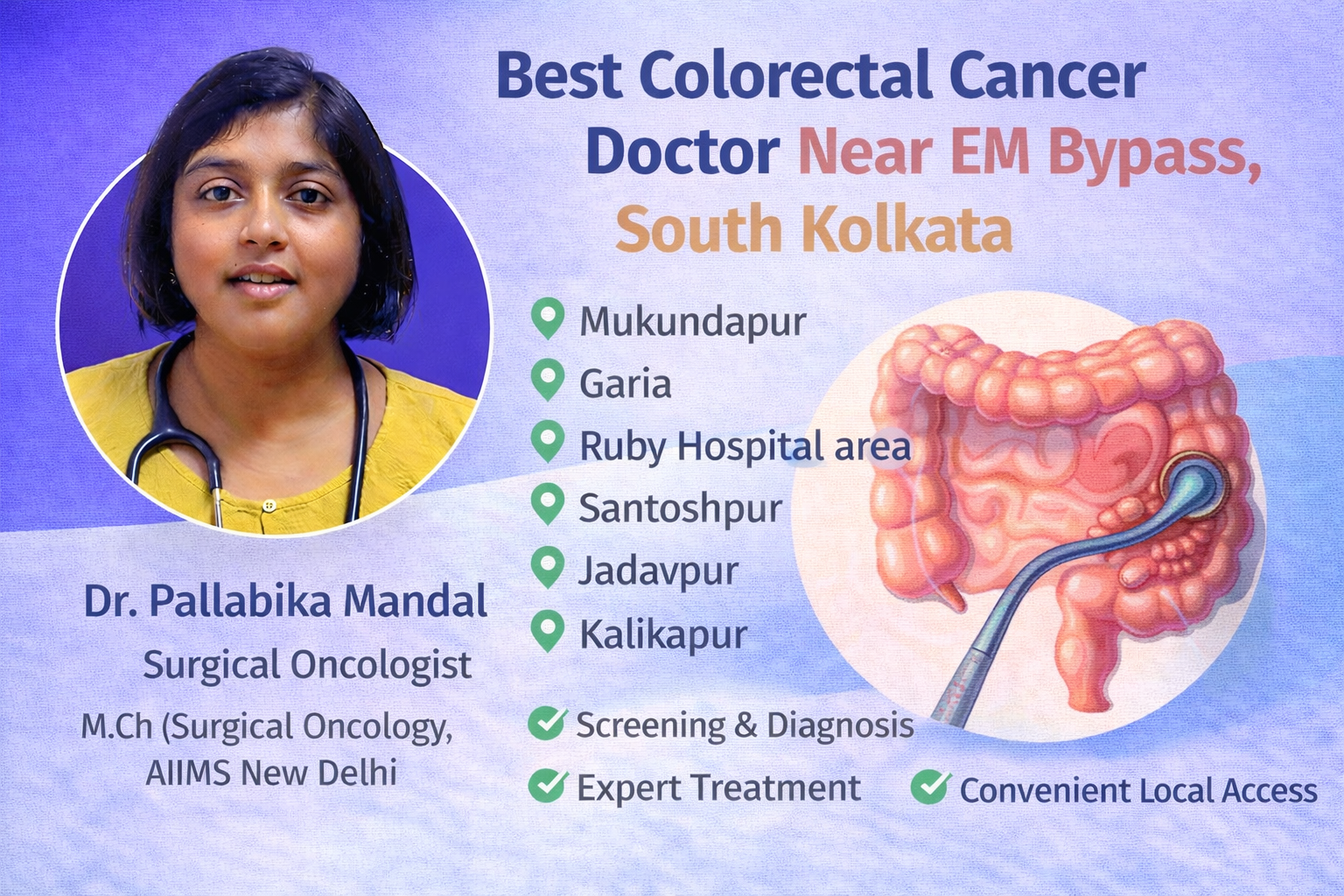
Dr Pallabika Mandal, M.Ch (Surgical Oncology), AIIMS New Delhi, provides expert evaluation, cancer diagnosis, and advanced treatment planning.
Her focus includes:
- Early detection
- Cancer prevention awareness
- Gastrointestinal cancers
- Gynecological cancers
- Breast cancer care
- Advanced surgical oncology
Related Reading
You may also find these resources helpful:
- Early Signs of Cancer Most People Ignore
- Cancer Screening in South Kolkata
- Cancer Treatment in South Kolkata
- Can You Have Cancer Without Symptoms?
- Unexplained Weight Loss: Could It Be a Warning Sign of Cancer?
FAQs
Does family history guarantee cancer?
No. It increases risk but does not guarantee cancer development.
Should I get screened earlier?
Possibly. Screening recommendations depend on your family history.
Which cancers are most hereditary?
Breast, ovarian, colon, uterine, prostate, and pancreatic cancers have stronger hereditary links.
What if only one relative had cancer?
One relative may not significantly increase risk, depending on cancer type and age.
Should I consult a specialist even if I have no symptoms?
Yes, especially if multiple close relatives have been affected.
Conclusion
Family history is an important part of understanding cancer risk, but it is only one piece of the puzzle.
Rather than creating fear, family history should encourage awareness, preventive care, and timely screening.
If cancer has affected multiple family members, discussing your risk with a qualified cancer specialist can help you make informed decisions and protect your long-term health.
Early awareness and early detection remain among the most powerful tools in modern cancer care.
Related Cancer Awareness Articles
- Can You Have Cancer Without Symptoms? What Every Patient Should Know
- Unexplained Weight Loss: Could It Be a Warning Sign of Cancer?
- Top Early Signs of Cancer Most People Ignore
- Cancer Screening in South Kolkata: Complete Guide
- Complete Guide to Cancer Treatment in South Kolkata
- Cancer vs Normal Symptoms: How to Identify Early Warning Signs
- When Should You Consult a Cancer Specialist?
- Dr Pallabika Mandal – Leading Surgical Oncologist in South Kolkata