




-
admin
- June 10, 2026
Blood in Stool: Could It Be a Sign of Cancer? | Expert Guide by Surgical Oncologist
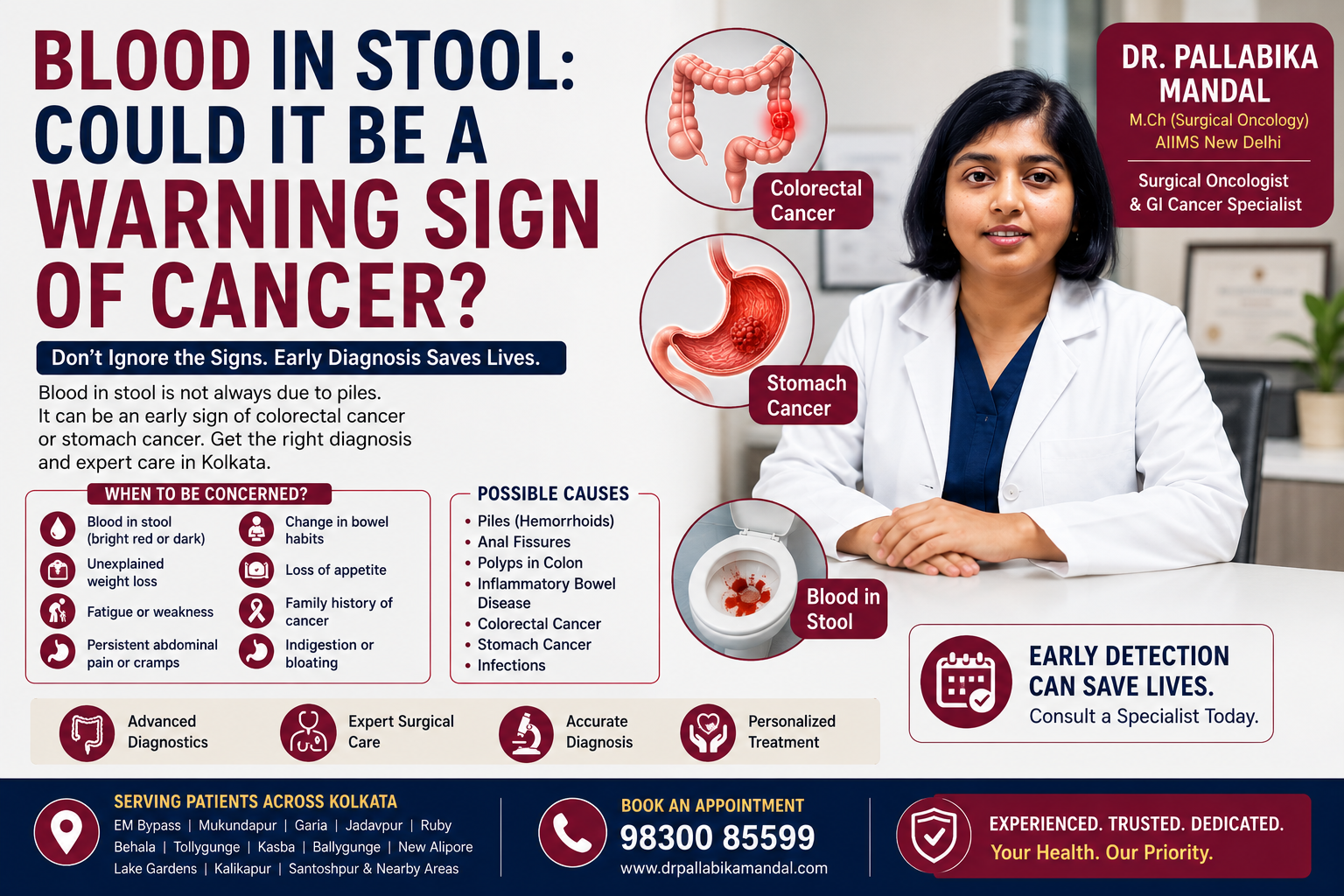
Blood in Stool: Could It Be a Warning Sign of Cancer?
Seeing blood in your stool can be alarming. While many people immediately think of piles (hemorrhoids), blood in the stool is not always caused by a harmless condition. In some cases, it can be an early warning sign of colorectal cancer, stomach cancer, or other gastrointestinal diseases.
Unfortunately, many patients ignore rectal bleeding or self-medicate without understanding the underlying cause. Delaying medical evaluation can allow serious conditions to progress.
If you live in Kolkata, particularly around EM Bypass, Mukundapur, Garia, Ruby Hospital, Jadavpur, Kasba, Behala, Tollygunge, Ballygunge, Santoshpur, Kalikapur, or New Alipore, persistent blood in the stool should be assessed by an experienced surgical oncologist or gastrointestinal specialist.
This guide explains when blood in the stool is likely to be harmless, when it may indicate cancer, and what investigations and treatments may be recommended.
Is Blood in Stool Always a Sign of Cancer?
No.
Most cases of blood in the stool are caused by non-cancerous conditions such as:
- Piles (Hemorrhoids)
- Anal fissures
- Constipation
- Inflammatory bowel disease
- Colon infections
- Colon polyps
However, blood in the stool should never be ignored, especially if it recurs or is associated with other symptoms.
When Should You Be Concerned?
You should seek medical evaluation if you notice:
- Blood in stool repeatedly
- Black, tarry stools
- Blood mixed with stool
- Unexplained weight loss
- Persistent abdominal pain
- Changes in bowel habits
- Fatigue due to anemia
- Loss of appetite
These symptoms may require investigations to rule out colorectal or stomach cancer.
What Does the Color of Blood Mean?
Bright Red Blood
Usually indicates bleeding from the lower part of the digestive tract, such as:
- Piles
- Anal fissures
- Rectal conditions
- Lower colon disorders
Dark Red Blood
May originate from the colon or upper rectum and requires medical assessment.
Black or Tarry Stool
Black stool may indicate bleeding from the stomach or upper digestive tract and should be evaluated immediately.
Could Blood in Stool Be a Sign of Colon Cancer?
Yes.
Colorectal cancer is one of the most common cancers affecting the digestive system. Early-stage colon cancer may cause:
- Blood in stool
- Persistent constipation
- Diarrhea
- Narrow stools
- Abdominal discomfort
- Unexplained weight loss
Early diagnosis greatly improves treatment outcomes.
Can Stomach Cancer Cause Blood in Stool?
Yes.
Bleeding from stomach cancer may travel through the digestive tract, resulting in black or tarry stools. Some patients may also experience:
- Persistent indigestion
- Loss of appetite
- Nausea
- Vomiting
- Early fullness
- Weight loss
Risk Factors
Your risk may be higher if you have:
- Age over 45 years
- Family history of colorectal cancer
- Smoking
- Obesity
- Diabetes
- Low-fiber diet
- Previous colon polyps
- Inflammatory bowel disease
How Is the Cause Diagnosed?
A specialist may recommend:
Clinical Examination
A detailed review of your symptoms and medical history.
Blood Tests
To check for anemia and other abnormalities.
Colonoscopy
The gold standard for detecting colon polyps and colorectal cancer.
Endoscopy
Useful when upper digestive tract bleeding is suspected.
CT Scan or MRI
Performed if cancer is diagnosed or strongly suspected.
Biopsy
Confirms the diagnosis if an abnormal growth is found.
Treatment Options
Treatment depends on the underlying cause.
Non-Cancerous Conditions
- Medicines
- Dietary changes
- Treatment for piles or fissures
Colorectal Cancer
Treatment may include:
- Surgery
- Chemotherapy
- Radiation therapy (for selected rectal cancers)
- Targeted therapy
Stomach Cancer
Treatment may involve:
- Surgery
- Chemotherapy
- Targeted therapy
- Immunotherapy (selected cases)
Why Early Diagnosis Matters
Many digestive cancers are highly treatable when detected early.
Ignoring symptoms may lead to:
- More extensive surgery
- Advanced-stage disease
- Longer recovery
- Higher treatment costs
Early consultation gives patients the best chance of successful treatment.
Expert Cancer Care in Kolkata
Patients across South Kolkata, including EM Bypass, Mukundapur, Garia, Ruby Hospital area, Kasba, Behala, Ballygunge, Tollygunge, Jadavpur, Santoshpur, Kalikapur, Lake Gardens, and New Alipore, consult Dr. Pallabika Mandal, M.Ch (Surgical Oncology), AIIMS New Delhi, for comprehensive evaluation and treatment of gastrointestinal cancers.
Her expertise includes:
- Stomach Cancer Surgery
- Colorectal Cancer Surgery
- Gallbladder Cancer
- Liver Cancer
- Advanced GI Oncology
- Minimally Invasive Cancer Surgery
Frequently Asked Questions
Does blood in stool always mean cancer?
No. Piles and fissures are common causes, but persistent bleeding should always be evaluated.
Which doctor should I consult?
A surgical oncologist or gastrointestinal specialist if cancer is suspected.
Can piles and cancer occur together?
Yes. Having piles does not rule out colorectal cancer.
Is colonoscopy painful?
Most colonoscopies are performed under sedation and are generally well tolerated.
When should I seek immediate medical attention?
If you experience heavy bleeding, black stools, severe abdominal pain, dizziness, or persistent bleeding, seek prompt medical care.
Related Cancer Awareness Articles
- Best Stomach Cancer Doctor in Kolkata – Symptoms, Diagnosis & Treatment Guide
- Can You Have Cancer Without Symptoms? What Every Patient Should Know
- Unexplained Weight Loss: Could It Be a Warning Sign of Cancer?
- Top Early Signs of Cancer Most People Ignore in Kolkata
- Cancer Screening in South Kolkata: Complete Guide
- Complete Guide to Cancer Treatment in South Kolkata
- Cancer vs Normal Symptoms: How to Identify Early Warning Signs
- Family History of Cancer: Are You at Higher Risk?
- When Should You Consult a Cancer Specialist in South Kolkata?
- Dr. Pallabika Mandal – Leading Surgical Oncologist in Kolkata
Conclusion
Blood in the stool should never be ignored. While many cases are caused by common, treatable conditions, persistent or unexplained bleeding can sometimes be an early sign of colorectal or stomach cancer.
Prompt medical evaluation allows the cause to be identified and treated appropriately. Early diagnosis not only improves treatment outcomes but can also reduce the need for more extensive procedures.
If you notice blood in your stool or other persistent digestive symptoms, consult an experienced cancer specialist without delay. Listening to your body and seeking timely care can make a significant difference to your long-term health.