




-
admin
- June 16, 2026
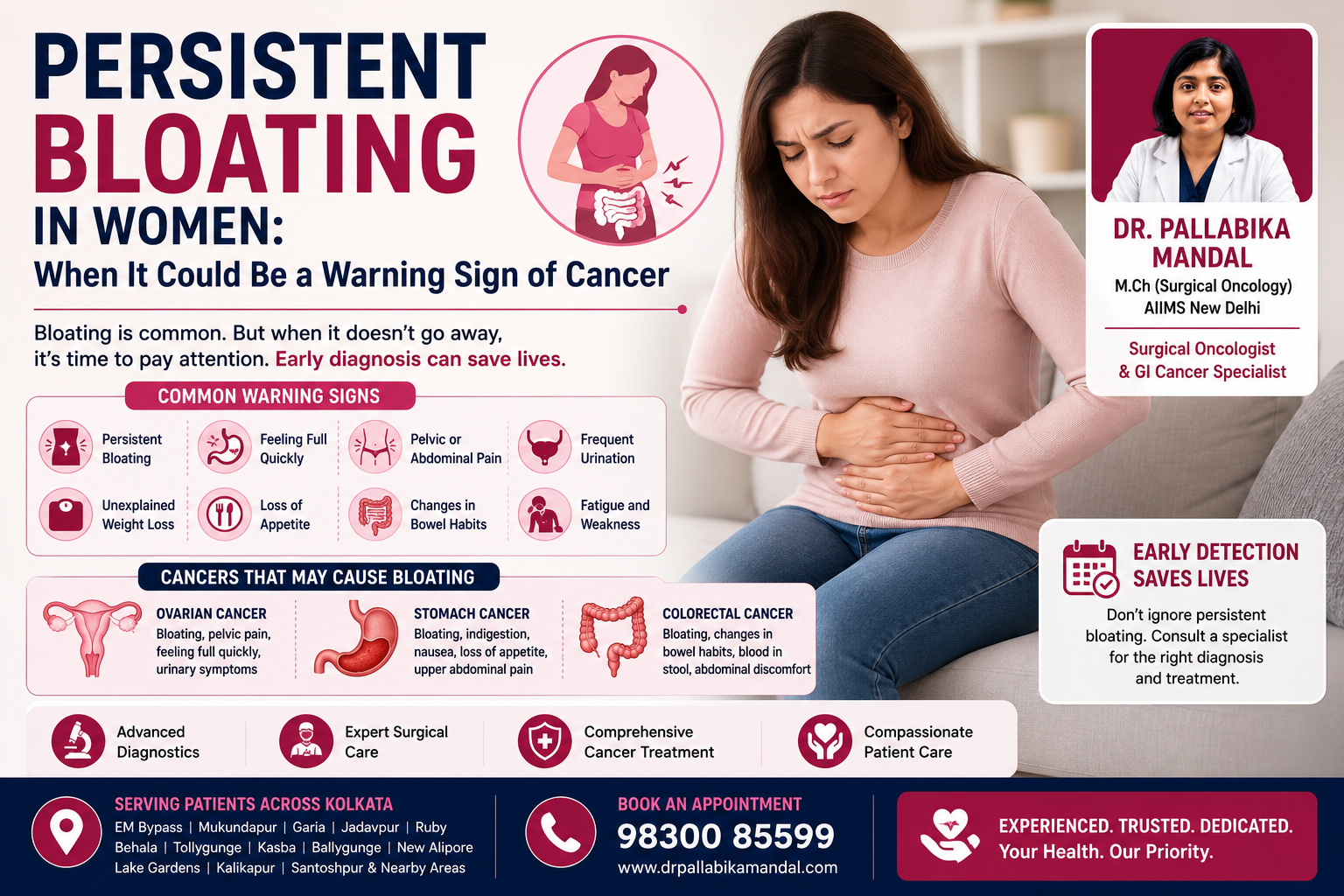
Persistent Bloating in Women: When It Could Be a Warning Sign of Cancer | Kolkata Guide (2026)
Most women experience bloating occasionally, especially after a heavy meal or during their menstrual cycle. In many cases, it is caused by common digestive issues or hormonal changes and resolves within a day or two.
However, bloating that persists for several weeks, occurs almost every day, or is accompanied by other symptoms should not be ignored.
Persistent bloating can sometimes be an early warning sign of ovarian cancer, stomach cancer, colorectal cancer, or other gastrointestinal conditions. While these cancers are less common than benign causes of bloating, early diagnosis significantly improves treatment outcomes.
Women in South Kolkata, including EM Bypass, Mukundapur, Garia, Ruby Hospital area, Jadavpur, Kasba, Behala, Ballygunge, Lake Gardens, Kalikapur, Santoshpur, Tollygunge, and nearby areas, should seek medical evaluation if bloating continues despite dietary changes or over-the-counter medicines.
What Is Persistent Bloating?
Persistent bloating is a feeling of abdominal fullness, swelling, or tightness that:
- Lasts for more than two to three weeks
- Occurs repeatedly
- Does not improve with dietary changes
- Interferes with daily activities
Unlike temporary bloating after eating, persistent bloating deserves medical attention.
Is Bloating Always a Sign of Cancer?
No.
Most women with bloating do not have cancer.
Common causes include:
- Indigestion
- Gas
- Irritable bowel syndrome (IBS)
- Constipation
- Food intolerance
- Menstrual hormonal changes
However, persistent bloating should always be evaluated because it may occasionally indicate a more serious condition.
Cancers That May Cause Persistent Bloating
Ovarian Cancer
Persistent bloating is one of the most common early symptoms of ovarian cancer.
Women may also notice:
- Pelvic discomfort
- Feeling full quickly
- Frequent urination
- Loss of appetite
- Unexplained weight loss
Stomach Cancer
Patients with stomach cancer may experience:
- Persistent bloating after meals
- Indigestion
- Nausea
- Reduced appetite
- Upper abdominal pain
Colorectal Cancer
Symptoms may include:
- Bloating
- Changes in bowel habits
- Blood in stool
- Fatigue
- Abdominal discomfort
Warning Signs That Require Immediate Medical Attention
Consult a specialist if bloating is associated with:
- Unexplained weight loss
- Persistent abdominal pain
- Blood in stool
- Black stools
- Vomiting
- Difficulty eating
- Fatigue
- Persistent constipation
Risk Factors
Certain factors increase the risk of gynecological and gastrointestinal cancers:
- Age above 45 years
- Family history of cancer
- Obesity
- Smoking
- Diabetes
- Endometriosis
- Chronic digestive disorders
How Is Persistent Bloating Evaluated?
Diagnosis begins with a detailed consultation and physical examination.
Your doctor may recommend:
- Blood tests
- Ultrasound
- CT scan
- MRI
- Endoscopy
- Colonoscopy
- Biopsy (if needed)
These tests help determine whether bloating is due to a digestive condition, ovarian disease, or another underlying problem.
Treatment Depends on the Cause
If bloating is caused by a benign condition, treatment may include:
- Dietary modifications
- Medicines
- Lifestyle changes
If cancer is diagnosed, treatment depends on:
- Cancer type
- Stage
- Overall health
Options may include:
- Surgery
- Chemotherapy
- Targeted therapy
- Radiation therapy (selected cases)
Why Early Diagnosis Matters
Many women delay medical consultation because they assume bloating is caused by gas or acidity.
Unfortunately, waiting too long may allow serious diseases to progress.
Early diagnosis can lead to:
- More treatment options
- Better surgical outcomes
- Faster recovery
- Higher survival rates
Expert Cancer Care in Kolkata
Patients from EM Bypass, Mukundapur, Garia, Ruby Hospital area, Behala, Jadavpur, Kasba, Ballygunge, Tollygunge, Lake Gardens, Santoshpur, and nearby locations consult Dr. Pallabika Mandal, M.Ch (Surgical Oncology), AIIMS New Delhi, for expert evaluation of gastrointestinal and gynecological cancers.
Her expertise includes:
- Ovarian Cancer
- Stomach Cancer
- Colorectal Cancer
- Gallbladder Cancer
- Breast Cancer
- Advanced GI & Gynecological Cancer Surgery
Frequently Asked Questions
Can bloating be the first sign of ovarian cancer?
Yes. Persistent bloating is one of the earliest and most common symptoms of ovarian cancer.
How long should bloating last before seeing a doctor?
If bloating continues for more than two to three weeks or occurs almost daily, consult a doctor.
Is bloating after meals normal?
Occasional bloating after meals is common. Persistent or worsening bloating requires evaluation.
Which doctor should I consult?
A surgical oncologist or gynecological specialist if cancer is suspected.
Can young women develop ovarian cancer?
Yes, although the risk increases with age.
Conclusion
Persistent bloating should never be dismissed if it continues for weeks or is accompanied by symptoms such as weight loss, abdominal pain, changes in bowel habits, or loss of appetite.
While most cases are caused by non-cancerous conditions, early medical evaluation is the safest way to identify the cause and begin appropriate treatment if necessary.
Listening to your body and seeking timely medical advice can make a significant difference in protecting your health.
Related Cancer Awareness Articles
- Top Early Signs of Cancer Most People Ignore in Kolkata
- Unexplained Weight Loss: Could It Be a Warning Sign of Cancer?
- Can You Have Cancer Without Symptoms?
- Family History of Cancer: Are You at Higher Risk?
- Cancer Screening in South Kolkata
- Complete Guide to Cancer Treatment in South Kolkata
- Best Stomach Cancer Doctor in Kolkata
- Difference Between Cancer and Normal Symptoms