




-
admin
- June 23, 2026
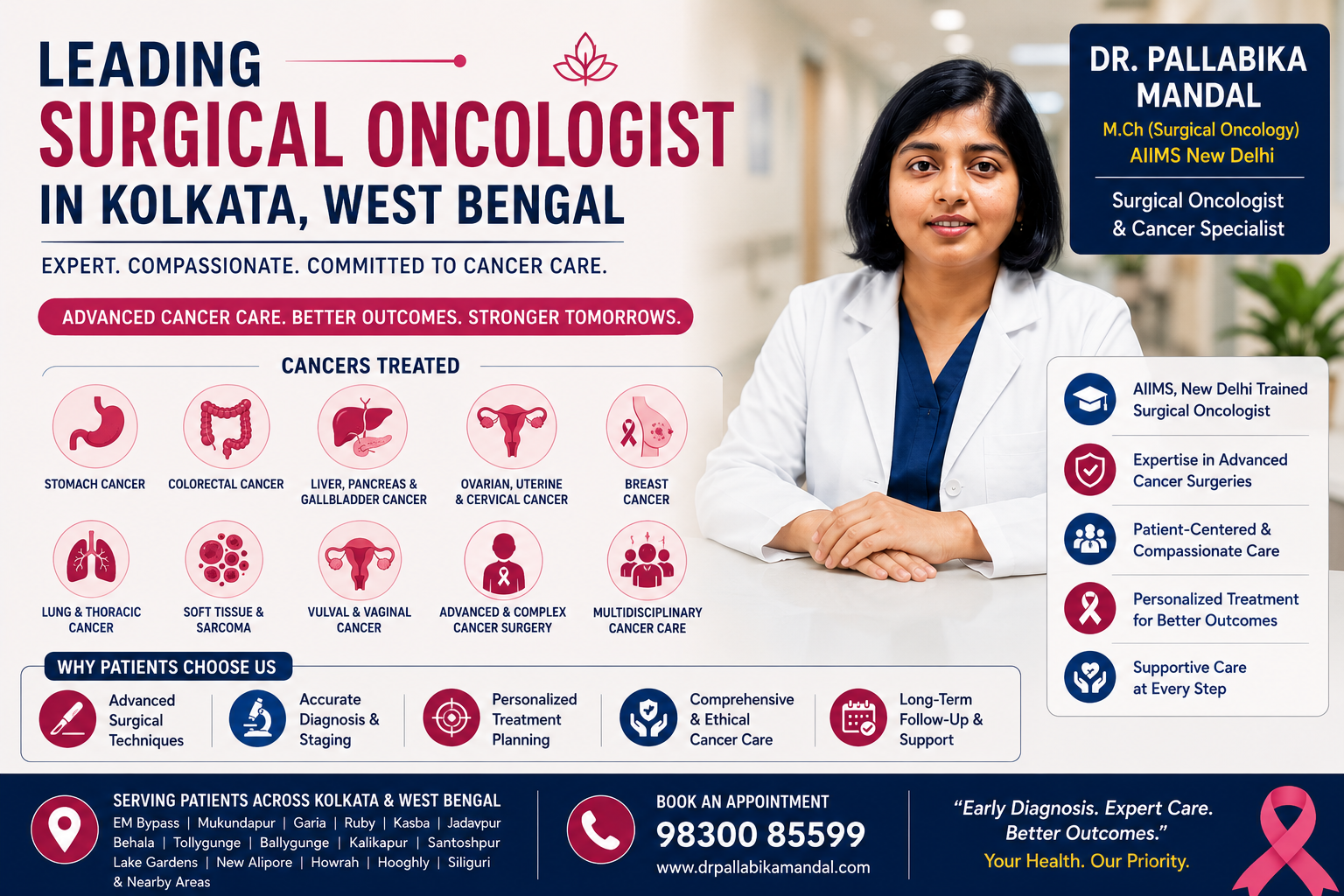
Leading Surgical Oncologist in Kolkata, West Bengal | Dr. Pallabika Mandal (2026-2027)
Receiving a cancer diagnosis is one of the most challenging moments in a person’s life. Along with the emotional stress, patients and their families often face an overwhelming number of questions:
Which doctor should I consult? Is surgery necessary? Will I recover? Am I receiving the right treatment?
Choosing the right cancer specialist is one of the most important decisions you will make during this journey. Cancer treatment today is no longer limited to surgery alone. Modern oncology combines precise diagnosis, multidisciplinary treatment planning, advanced surgical techniques, chemotherapy, radiation therapy, targeted therapy, and long-term follow-up care.
Among these specialists, the role of a Surgical Oncologist is particularly important because surgery remains one of the most effective treatments for many solid cancers when diagnosed at the right stage.
If you are looking for a leading Surgical Oncologist in Kolkata, West Bengal, Dr. Pallabika Mandal offers evidence-based, compassionate, and personalized cancer care backed by advanced surgical training and experience in managing complex cancer cases.
Patients from Kolkata as well as surrounding districts of West Bengal consult Dr. Mandal for expert evaluation, second opinions, cancer diagnosis, and advanced surgical treatment.
Who is Dr. Pallabika Mandal?
Dr. Pallabika Mandal is an AIIMS-trained Surgical Oncologist dedicated to treating patients with compassion, scientific precision, and individualized care.
She completed her M.Ch in Surgical Oncology from the prestigious All India Institute of Medical Sciences (AIIMS), New Delhi, one of India’s premier institutions for medical education and cancer care.
Her advanced training enables her to diagnose and surgically treat a wide spectrum of cancers using evidence-based techniques while focusing on the best possible functional and oncological outcomes.
Rather than following a one-size-fits-all approach, every patient receives a treatment plan tailored to their cancer type, stage, age, overall health, and personal goals.
Why Choosing the Right Surgical Oncologist Matters
Cancer surgery is far more complex than removing a tumour.
Successful cancer treatment requires careful planning before surgery, precise execution during surgery, and comprehensive follow-up afterward.
An experienced Surgical Oncologist focuses on:
- Accurate diagnosis
- Proper cancer staging
- Complete tumour removal when appropriate
- Preservation of normal organs whenever possible
- Coordination with medical and radiation oncologists
- Reducing recurrence risk
- Long-term follow-up care
Choosing an experienced specialist early in the treatment journey can significantly influence both recovery and long-term outcomes.
Areas of Expertise
Dr. Pallabika Mandal has extensive experience in managing a broad range of cancers, with particular expertise in gastrointestinal and gynecological oncology.
Gastrointestinal (GI) Cancers
These cancers affect the digestive system and often require specialized surgical expertise.
Conditions treated include:
- Stomach cancer
- Colorectal cancer
- Gallbladder cancer
- Liver cancer
- Pancreatic cancer
- Small intestine cancers
Patients experiencing persistent abdominal pain, unexplained weight loss, blood in the stool, or ongoing digestive symptoms should seek timely medical evaluation.
Breast Cancer
Breast cancer is one of the most common cancers among women in India.
Early diagnosis and individualized treatment have dramatically improved survival rates.
Treatment planning may involve:
- Breast-conserving surgery
- Mastectomy
- Sentinel lymph node biopsy
- Reconstruction planning
- Multidisciplinary care
Gynecological Cancers
Dr. Mandal also specializes in cancers affecting the female reproductive system, including:
- Ovarian cancer
- Uterine cancer
- Cervical cancer
- Vulval cancer
- Vaginal cancer
Early symptoms are often subtle, making timely consultation especially important.
Thoracic Cancers
Thoracic cancers involve organs within the chest, including:
- Lung cancer
- Mediastinal tumours
- Chest wall tumours
Treatment depends on accurate diagnosis, staging, and multidisciplinary evaluation.
Patient-Centered Cancer Care
Every patient has a unique medical history, personal priorities, and treatment goals.
Rather than focusing only on the disease, Dr. Pallabika Mandal believes in treating the individual as a whole.
During consultation, patients receive clear explanations about:
- Diagnosis
- Stage of cancer
- Available treatment options
- Benefits and possible risks
- Expected recovery
- Long-term follow-up
This transparent approach helps patients and families make informed decisions with confidence.
Advanced Surgical Techniques
Cancer surgery has advanced significantly over the past decade.
Whenever appropriate, modern techniques may offer:
- Smaller incisions
- Reduced blood loss
- Faster recovery
- Less postoperative pain
- Earlier return to normal activities
Depending on the individual case, treatment may include:
Conventional Open Surgery
Still considered the best option for certain complex cancers.
Laparoscopic Surgery
Performed through small incisions using specialized instruments.
Minimally Invasive Cancer Surgery
Selected patients may benefit from less invasive procedures while maintaining oncological safety.
The most appropriate surgical approach is determined after detailed evaluation.
Importance of Early Diagnosis
One of the biggest challenges in cancer treatment is delayed diagnosis.
Many cancers begin with symptoms that appear harmless, such as:
- Persistent acidity
- Indigestion
- Bloating
- Mild abdominal pain
- Unexplained fatigue
- Weight loss
- Blood in stool
Unfortunately, many patients ignore these symptoms for months.
Seeking medical evaluation early often provides:
- More treatment options
- Better surgical outcomes
- Lower treatment costs
- Improved survival
- Better quality of life
Cancer Types Frequently Seen in Kolkata
Patients across Kolkata commonly present with:
- Stomach cancer
- Colorectal cancer
- Gallbladder cancer
- Breast cancer
- Ovarian cancer
- Cervical cancer
- Liver cancer
Lifestyle changes, increasing life expectancy, and greater awareness have contributed to earlier diagnosis in many cases.
However, timely consultation remains the most important factor in successful treatment.
Serving Patients Across Kolkata & West Bengal
Patients regularly consult Dr. Pallabika Mandal from:
- EM Bypass
- Mukundapur
- Garia
- Ruby Hospital area
- Kasba
- Jadavpur
- Behala
- Ballygunge
- Tollygunge
- Kalikapur
- Santoshpur
- Lake Gardens
- Dhakuria
- New Alipore
- Salt Lake
- Howrah
- Hooghly
- North 24 Parganas
- South 24 Parganas
- Bardhaman
- Durgapur
- Siliguri
- Entire West Bengal
How Cancer Is Diagnosed
One of the biggest concerns patients have after hearing the word “cancer” is whether the diagnosis is accurate. Before recommending surgery or any other treatment, it is essential to understand what type of cancer is present, where it started, and whether it has spread.
Cancer diagnosis is therefore a carefully planned process rather than a single test.
Clinical Consultation
The first consultation involves a detailed discussion about your symptoms, medical history, previous illnesses, medications, and family history of cancer. Many patients are surprised to learn that even subtle symptoms such as persistent indigestion, unexplained fatigue, or changes in bowel habits can provide valuable clues.
Imaging Investigations
Depending on the suspected cancer, investigations may include:
- Ultrasound
- CT Scan
- MRI
- PET-CT Scan
- Mammography (for breast abnormalities)
These investigations help determine the size of the tumour, involvement of nearby organs, and possible spread.
Biopsy
A biopsy remains the gold standard for confirming cancer.
During this procedure, a small sample of tissue is collected and examined by a pathologist. The biopsy confirms:
- Whether the growth is cancerous
- The exact type of cancer
- Tumour characteristics
- Additional information that helps guide treatment
Without a biopsy, it is generally not possible to confirm a cancer diagnosis.
Multidisciplinary Cancer Care
Modern cancer treatment involves a team of specialists rather than a single doctor.
Depending on the patient’s condition, treatment planning may involve:
- Surgical Oncologist
- Medical Oncologist
- Radiation Oncologist
- Radiologist
- Pathologist
- Gastroenterologist
- Nutritionist
- Physiotherapist
Every treatment plan is tailored to the patient’s diagnosis, stage of disease, overall health, and personal preferences.
Personalized Treatment Planning
No two patients have exactly the same cancer.
Even patients with the same diagnosis may require different treatment depending on:
- Tumour location
- Cancer stage
- General health
- Age
- Existing medical conditions
- Nutritional status
Treatment planning is therefore individualized rather than standardized.
Cancer Treatments Available
Cancer treatment often combines several approaches to achieve the best possible outcome.
Surgery
For many solid cancers, surgery remains the most effective treatment when the disease is detected early.
The objective is complete removal of the tumour while preserving as much normal tissue and function as possible.
Chemotherapy
Chemotherapy uses medicines to destroy cancer cells or reduce the risk of recurrence. It may be recommended:
- Before surgery
- After surgery
- For advanced cancers
- Along with other treatments
Radiation Therapy
Radiation therapy uses high-energy beams to destroy cancer cells. It may be used before surgery, after surgery, or as the primary treatment in selected cancers.
Targeted Therapy
Some cancers have specific molecular changes that allow treatment with targeted drugs designed to attack cancer cells while minimizing damage to healthy tissues.
Immunotherapy
Immunotherapy helps the body’s immune system recognize and fight cancer. It is suitable for selected cancers after careful evaluation.
Why Many Patients Seek a Second Opinion
Receiving a cancer diagnosis is life-changing, and many patients understandably want reassurance before beginning treatment.
Seeking a second opinion can help:
- Confirm the diagnosis
- Review pathology reports
- Discuss alternative treatment options
- Understand risks and benefits
- Increase confidence in the treatment plan
An experienced surgical oncologist can explain the available options in simple language, helping patients make informed decisions.
Recovery After Cancer Surgery
Recovery depends on several factors, including the type of surgery, overall health, and nutritional status.
Most patients benefit from:
- Early mobilization
- Balanced nutrition
- Pain management
- Regular wound care
- Scheduled follow-up visits
Recovery is not only physical but also emotional. Support from family, healthcare professionals, and counsellors often plays an important role during this period.
Cancer Prevention and Regular Screening
Although not every cancer can be prevented, several measures can reduce the overall risk.
Healthy Lifestyle
Doctors recommend:
- Avoiding tobacco
- Limiting alcohol consumption
- Eating a balanced diet rich in fruits and vegetables
- Maintaining a healthy body weight
- Exercising regularly
- Managing diabetes and hypertension
Regular Screening
Screening allows certain cancers to be detected before symptoms become severe.
Depending on age and risk factors, screening may include:
- Breast screening
- Colonoscopy
- Endoscopy
- Cervical cancer screening
- Imaging studies
Early detection remains one of the most effective ways to improve survival.
Why Patients Trust Dr. Pallabika Mandal
Patients from Kolkata and across West Bengal choose Dr. Pallabika Mandal because of her commitment to evidence-based, compassionate cancer care.
Highlights
- M.Ch (Surgical Oncology), AIIMS New Delhi
- Expertise in GI, breast, gynecological, thoracic, and hepatobiliary cancers
- Individualized treatment planning
- Clear communication with patients and families
- Focus on evidence-based surgical oncology
- Multidisciplinary approach to cancer care
- Compassionate and patient-centered treatment philosophy
Every patient receives careful evaluation and a treatment plan based on current clinical guidelines rather than a routine approach.
Frequently Asked Questions
What does a Surgical Oncologist do?
A Surgical Oncologist specializes in diagnosing and surgically treating cancers while coordinating overall cancer care.
When should I consult a Surgical Oncologist?
Consult a specialist if you experience persistent symptoms such as unexplained weight loss, blood in the stool, persistent bloating, breast lumps, non-healing ulcers, abnormal imaging findings, or have been diagnosed with cancer.
Is surgery always necessary?
No. Treatment depends on the type and stage of cancer. Some patients require surgery, while others may benefit from chemotherapy, radiation therapy, targeted therapy, or a combination of treatments.
Can cancer be cured?
Many cancers are highly treatable when diagnosed early. The outcome depends on the type of cancer, stage at diagnosis, and overall health.
Should I get a second opinion?
Yes. Many patients choose to seek a second opinion before major cancer treatment. It helps them understand all available options and make informed decisions.
Related Cancer Awareness Articles
- Best Stomach Cancer Doctor in Kolkata
- Blood in Stool: Could It Be a Warning Sign of Cancer?
- Persistent Bloating in Women: When It Could Be a Warning Sign of Cancer
- Top Early Signs of Cancer Most People Ignore
- Cancer Screening in South Kolkata
- Complete Guide to Cancer Treatment in South Kolkata
- Unexplained Weight Loss: Could It Be a Warning Sign of Cancer?
- Can You Have Cancer Without Symptoms?
- Family History of Cancer: Are You at Higher Risk?
- Difference Between Cancer and Normal Symptoms
Conclusion
Choosing the right cancer specialist is one of the most important decisions a patient can make. An experienced Surgical Oncologist not only performs complex cancer surgery but also guides patients through every stage of diagnosis, treatment, recovery, and long-term follow-up.
Dr. Pallabika Mandal combines advanced surgical training from AIIMS New Delhi with a patient-first approach, offering personalized care for gastrointestinal, breast, gynecological, thoracic, and hepatobiliary cancers. Patients from Kolkata and across West Bengal trust her for evidence-based treatment, transparent communication, and compassionate support throughout their cancer journey.
If you or a loved one has persistent symptoms, an abnormal investigation, or a confirmed cancer diagnosis, seeking timely specialist consultation can make a meaningful difference. Early evaluation, accurate diagnosis, and individualized treatment planning remain the foundations of successful cancer care.