




-
admin
- April 9, 2026
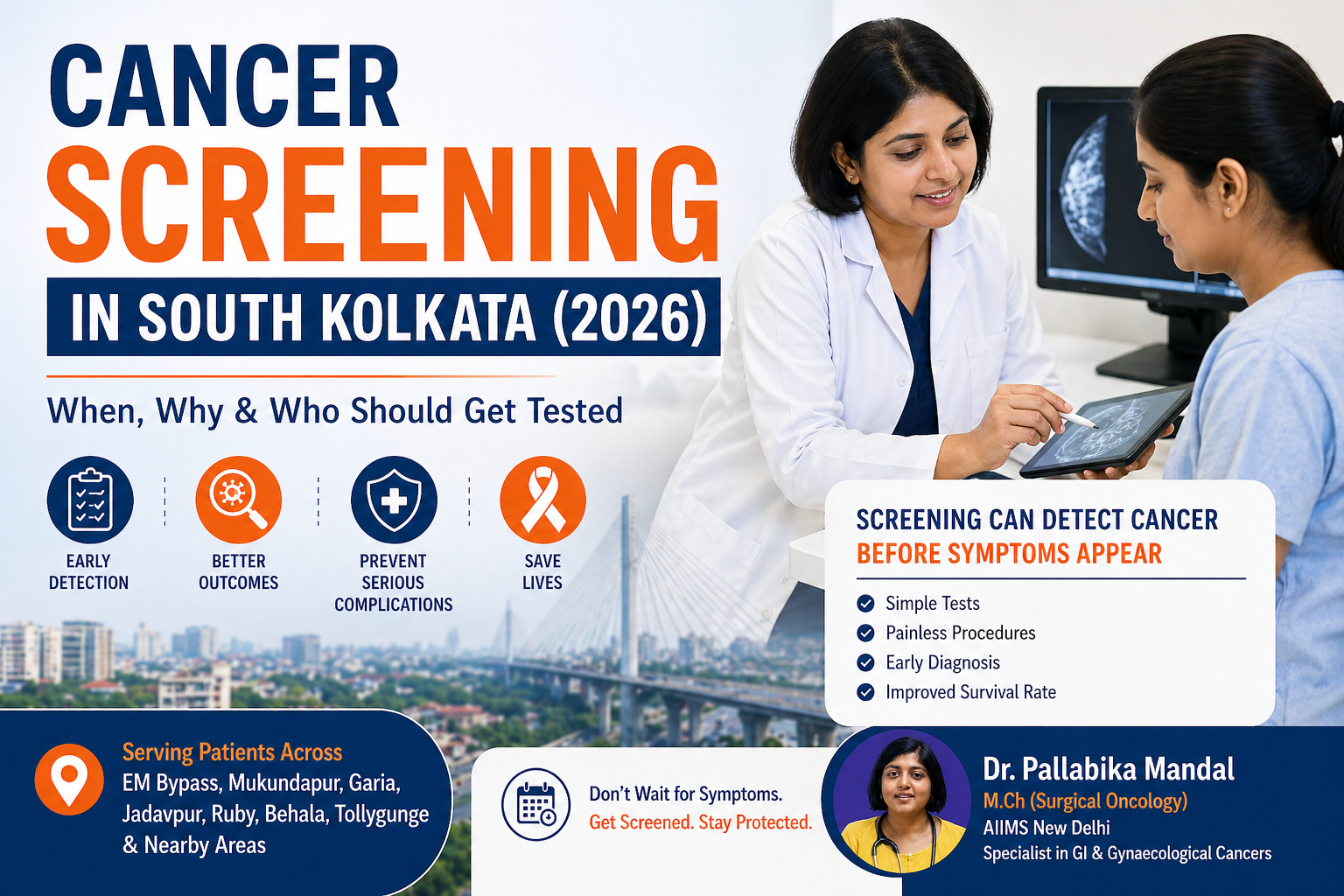
Cancer Screening in South Kolkata (2026) – When to Get Tested & Early Detection Guide
Cancer Screening in South Kolkata (2026): When, Why & Who Should Get Tested
If you are living in South Kolkata areas like EM Bypass, Mukundapur, Garia, Ruby Hospital area, Jadavpur, Behala, or Santoshpur, you may have heard about cancer screening—but many people still don’t know when they should actually get tested.
Most cancers don’t show symptoms in the early stage. By the time symptoms appear, the disease may already be advanced. This is where cancer screening becomes life-saving.
What is Cancer Screening?
Cancer screening refers to medical tests performed to detect cancer at an early stage in people who do not yet have symptoms.
The goal is simple:
- Detect cancer early
- Start treatment quickly
- Improve survival rates
- Reduce treatment cost
For many cancers, early detection through screening can be the difference between simple treatment and complex therapy.
Why Cancer Screening is Important in Kolkata
In Kolkata, lifestyle changes, dietary habits, and late medical consultations have increased cancer cases in recent years.
Common reasons people delay screening include:
- Fear of diagnosis
- Lack of awareness
- Busy lifestyle
- Assuming “nothing is wrong”
Unfortunately, this delay often leads to late-stage detection.
Who Should Get Cancer Screening?
You should consider screening if you fall into any of these categories:
- Age above 40–45
- Family history of cancer
- Smoking or alcohol use
- Obesity or sedentary lifestyle
- Chronic medical conditions
Even without symptoms, regular screening is recommended for early detection.
Common Cancer Screening Tests
1. Breast Cancer Screening
Mammography helps detect breast cancer early, often before a lump is felt.
2. Cervical Cancer Screening
Pap smear and HPV tests help identify early changes before cancer develops.
3. Colon Cancer Screening
Colonoscopy detects polyps and early-stage colorectal cancer.
4. Oral Cancer Screening
Important for tobacco users—detects early mouth cancers.
5. Prostate Screening (for men)
PSA blood test helps detect prostate-related issues.
How Often Should You Get Screened?
Screening frequency depends on age and risk factors:
- Breast screening: Every 1–2 years (above 40)
- Cervical screening: Every 3 years
- Colon screening: Every 5–10 years (after 45)
- High-risk patients: More frequent screening
Always consult a specialist to create a personalized screening plan.
Benefits of Early Cancer Screening
- Early diagnosis
- Less aggressive treatment
- Lower treatment cost
- Better survival rate
- Improved quality of life
Where to Get Cancer Screening in South Kolkata
Patients from EM Bypass, Mukundapur, Garia, Ruby Hospital area, Jadavpur, and nearby locations have access to modern diagnostic facilities and specialist care.
Consulting an experienced oncologist ensures:
- Correct test selection
- Accurate interpretation
- Timely follow-up
Expert Cancer Care in South Kolkata
Dr. Pallabika Mandal
M.Ch (Surgical Oncology), AIIMS New Delhi
Specialist in GI & Gynecological Cancers
She provides guidance on screening, early diagnosis, and personalized treatment planning.
When Should You Not Delay Screening?
- Family history of cancer
- Persistent symptoms
- High-risk lifestyle
- Age above 45
Even mild symptoms should not be ignored.
Conclusion
Cancer screening is not something to delay. It is a simple step that can prevent serious complications in the future.
For people in South Kolkata, access to expert care means you don’t have to wait until symptoms become severe.
Taking action early can protect your health, reduce treatment cost, and save lives.
Consult Dr. Pallabika Mandal for expert screening advice and early detection support.
FAQs
What is the best age to start cancer screening?
Most screenings begin after age 40–45, but high-risk individuals may need earlier testing.
Is cancer screening painful?
Most screening tests are simple and minimally uncomfortable.
Can screening prevent cancer?
Yes, some screenings detect precancerous changes and prevent cancer development.
How long does screening take?
Most tests take a few minutes to a few hours depending on the procedure.
Do I need screening without symptoms?
Yes, screening is meant for people without symptoms.